The Heart of Connection: Practical Tools for Healthier Relationships

One of the most important parts of connection is recognizing that communication happens long before words are spoken.
Healthy relationships are often built in the small, everyday moments — the way we listen, respond during conflict, express care, and remain emotionally present with one another. While many couples hope connection will come naturally, strong relationships are usually formed through intentional habits, emotional awareness, and a willingness to continue growing together over time.
One of the most important parts of connection is recognizing that communication happens long before words are spoken. Facial expressions, tone of voice, posture, and emotional presence all communicate messages to the people we love. Becoming more aware of these nonverbal cues can help create greater emotional safety and understanding.
Healthy relationships also thrive when both people feel seen, heard, and valued. Taking time to ask thoughtful questions, listen with curiosity, and seek to understand before responding can deepen trust and emotional intimacy.
At the same time, many of our reactions are shaped by past experiences, emotional wounds, and personal expectations. Learning to recognize these emotional filters can help couples respond with greater empathy and compassion during difficult moments.
Conflict itself is not necessarily unhealthy. In fact, disagreements can become opportunities for growth when couples approach one another with humility, emotional regulation, and care.
To support these conversations, we have included companion reflection resources designed to help individuals and couples explore these themes more intentionally. These guided questions encourage emotional awareness, meaningful conversation, and practical tools for healthier relationships.
Whether you are dating, engaged, newly married, or have been together for many years, intentional connection can strengthen emotional safety, trust, and long-term relational health.
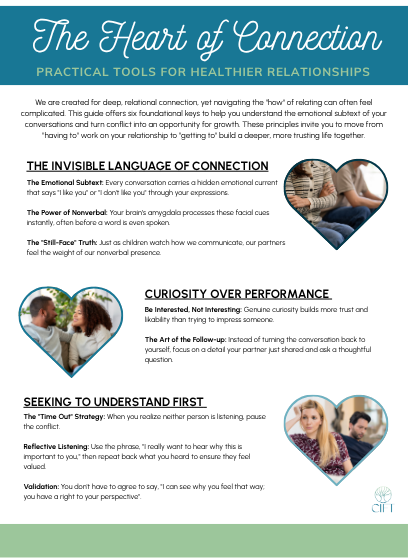
Download the free Resource & Personal Reflections worksheet. Begin moving from "having to" work on your relationship to "getting to" build a deeper, more trusting life together.
This resource was inspired by the “Six Keys to Healthy Relationships” framework developed by Dr. Chris and Alisa Grace (Biola CMR) and authored by Kelly Greene, AMFT, at the Center for Individual and Family Therapy.
The content provided is educational in nature and is not a substitute for individualized therapy or professional mental health care.
© 2026 Center for Individual and Family Therapy. Please do not reproduce or distribute this resource without written permission.